



P2X7 Receptor Antagonist
- 1
-
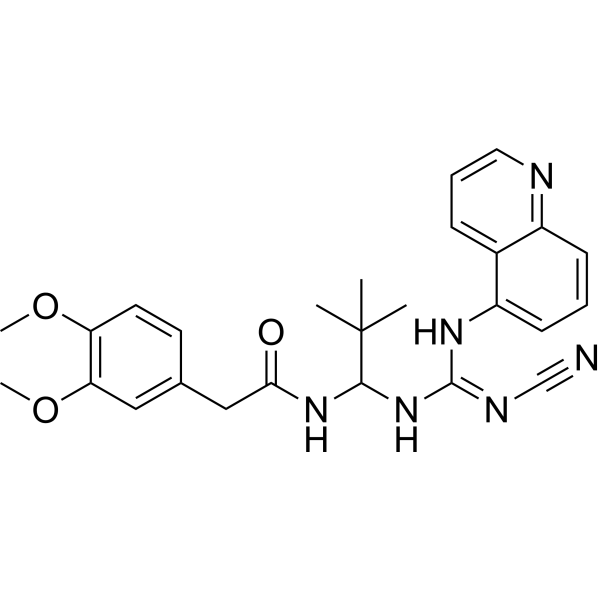
A-740003
 0 Images
A-740003 is a potent, selective and competitive P2X7 receptor antagonist with IC50 values are 18 and 40 nM for rat and human P2X7 receptors, respectively.
-
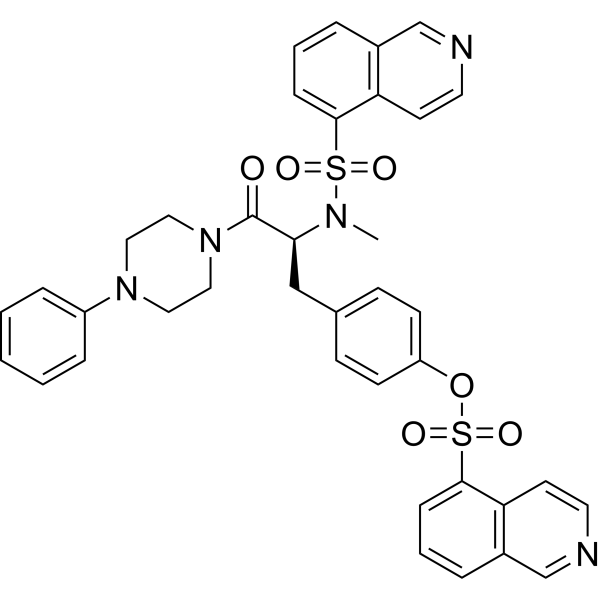
KN-62
 0 Images
KN-62 is a selective and reversible inhibitor of calmodulin-dependent protein kinase II (CaMK-II) with a Ki of 0.9 μM for rat brain CaMK-II. KN-62 directly binds to the calmodulin binding site of CaMK-II. KN-62 displays noncompetitive antagonism at P2X7 receptors in HEK293 cells, with an IC50 value of approximately 15 nM.
-
P2X7R antagonist-1
 0 ImagesCat. No.: HY-183784
P2X7R antagonist-1 is an orally active P2X7 receptor antagonist with an IC50 of 3.57 μM. P2X7R antagonist-1 inhibits the proliferation, invasion and metastasis abilities of cancer cells. P2X7R antagonist-1 downregulates the expression of FAK and MMP-9. P2X7R antagonist-1 suppresses tumor growth and metastasis in a mouse breast cancer model. P2X7R antagonist-1 promotes the activation of CD4 and CD8 T cells. P2X7R antagonist-1 can be used in breast cancer-related research.
-
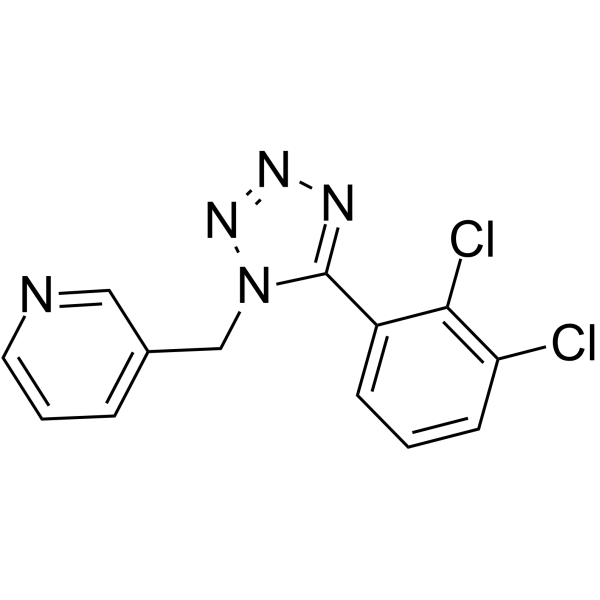
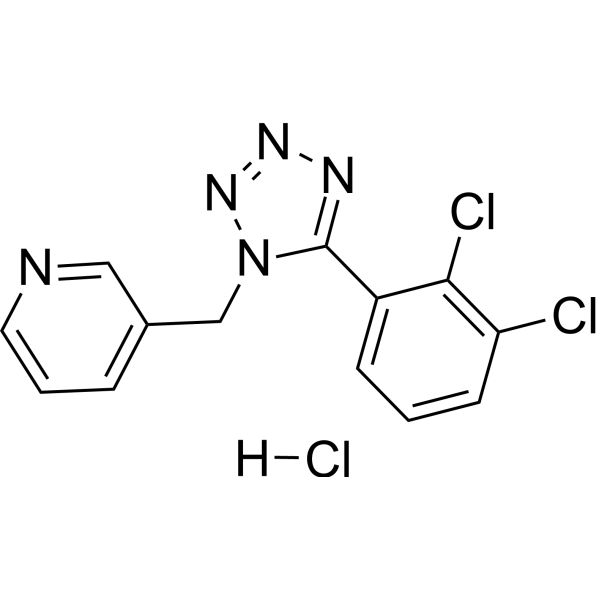
A 438079 hydrochloride
 0 Images
A 438079 (hydrochloride) is a potent, and selective P2X7 receptor antagonist with pIC50 of 6.9.
-
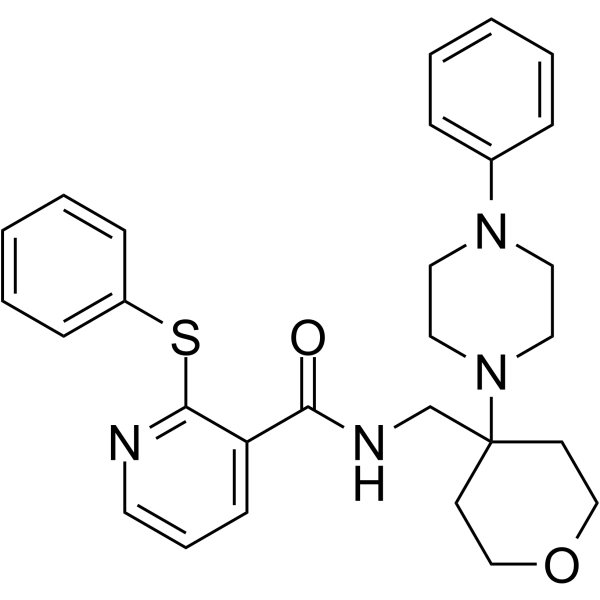
JNJ-47965567
 0 Images
JNJ-47965567 is a centrally permeable, high-affinity, selective P2X7 antagonist, with pKis of 7.9 and 8.7 for human and rat P2X7, respectively. JNJ-47965567 can be used to probe the role of central P2X7 in rodent models of CNS pathophysiology.
-
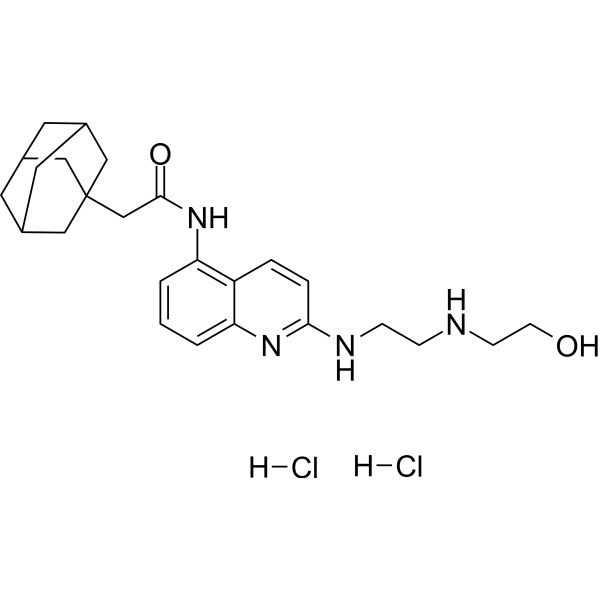
AZ10606120 dihydrochloride
 0 Images
AZ10606120 dihydrochloride is a selective, high affinity antagonist for P2X7 receptor (P2X7R) at human and rat with an IC50 of about 10 nM. AZ10606120 dihydrochloride is little or no effect at other P2XR subtypes. AZ10606120 dihydrochloride has anti-depressant effects and reduces tumour growth.
-
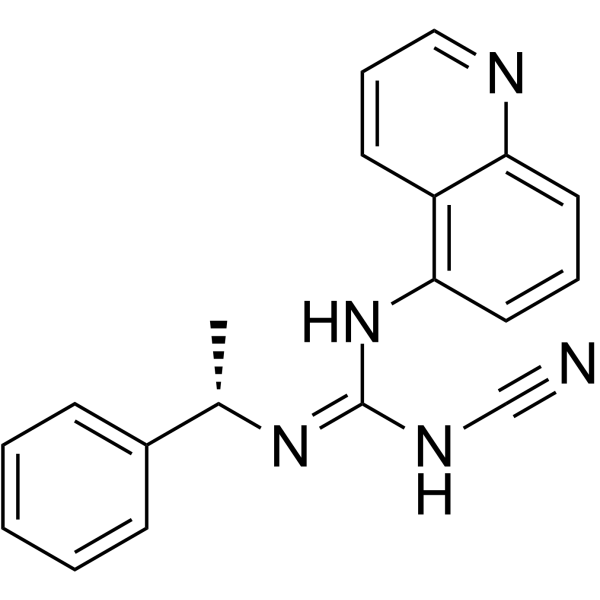
A-804598
 0 Images
A-804598 is a BBB penetrant, competitive and selective P2X7 receptor antagonist with IC50s of 9 nM, 10 nM and 11 nM for mouse, rat and human P2X7 receptors, respectively.
-
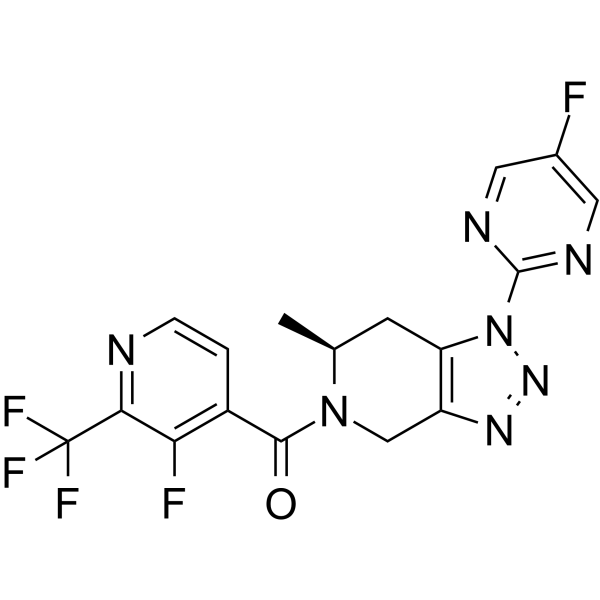
JNJ-55308942
 0 Images
JNJ-55308942 is a high-affinity, selective, brain-penetrant P2X7 functional antagonist (hP2X7: IC50=10 nM, Ki=7.1 nM; rP2X7: IC50=15 nM, Ki=2.9 nM). JNJ-55308942 is orally bioavailable, binds to brain P2X7 and blocks IL-1β release from adult rodent brain.
-
Oxatomide
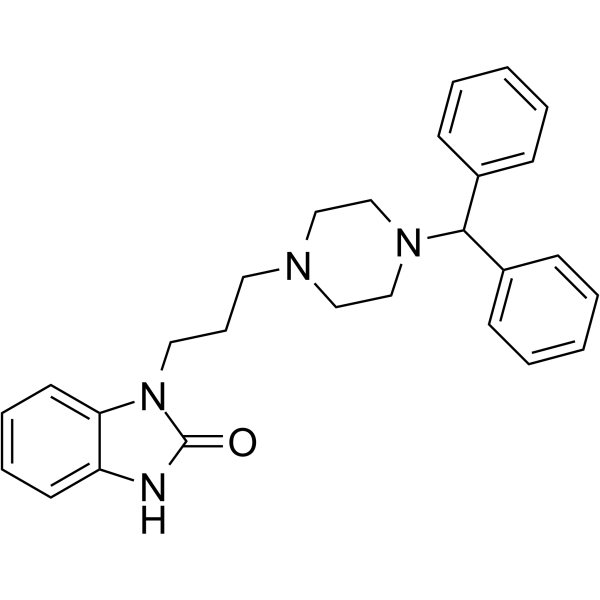 0 ImagesSynonyms: KW-4354
Oxatomide (KW-4354) is an orally active dual antagonist of the H1-histamine receptor and the P2X7 receptor, as well as an inhibitor of serotonin. Oxatomide possesses antihistaminic, antiallergic and anti-inflammatory activities. Oxatomide can be used in the research of allergic diseases.
-
JNJ-54175446
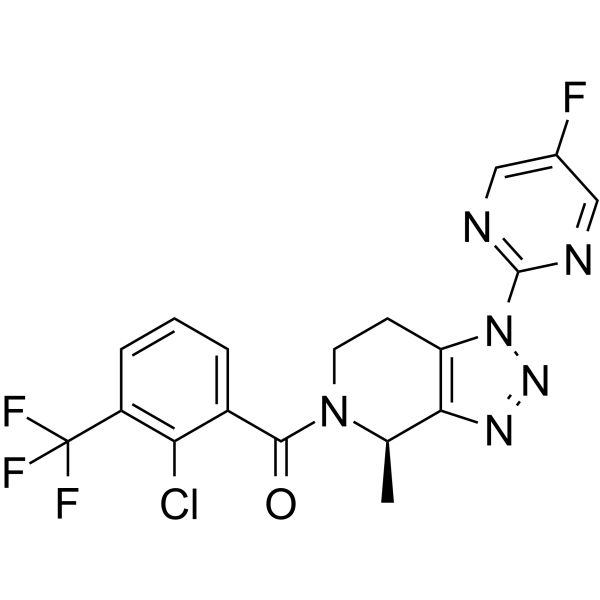 0 Images
JNJ-54175446 is a potent and selective brain penetrant P2X7 receptor antagonist, with pIC50s of 8.46 and 8.81 for hP2X7 receptor and rP2X7 receptor, respectively.
-
A 839977
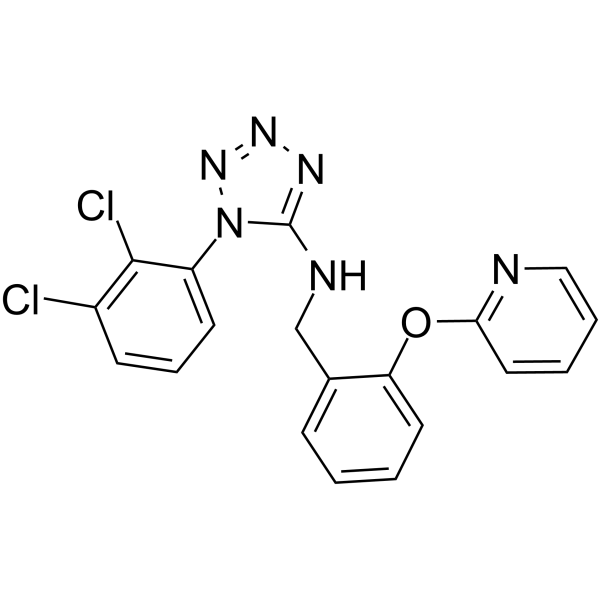 0 Images
A 839977 is a P2X7 selective antagonist; it blocks BzATP-evoked calcium influx at recombinant human, rat and mouse P2X7 receptors (IC50 values are 20 nM, 42 nM and 150 nM respectively) and reduces inflammatory and neuropathic pain in animal models; the antihyperalgesic effects of P2X7 receptor blockade are mediated by blocking the release of IL-1beta.
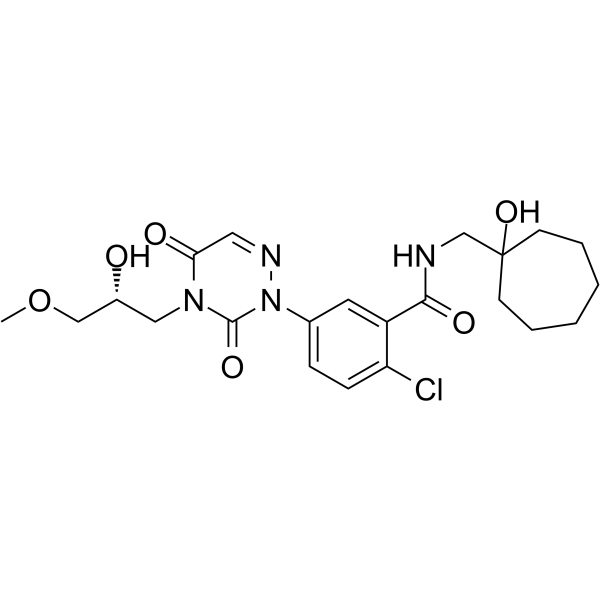
-
Lu AF27139
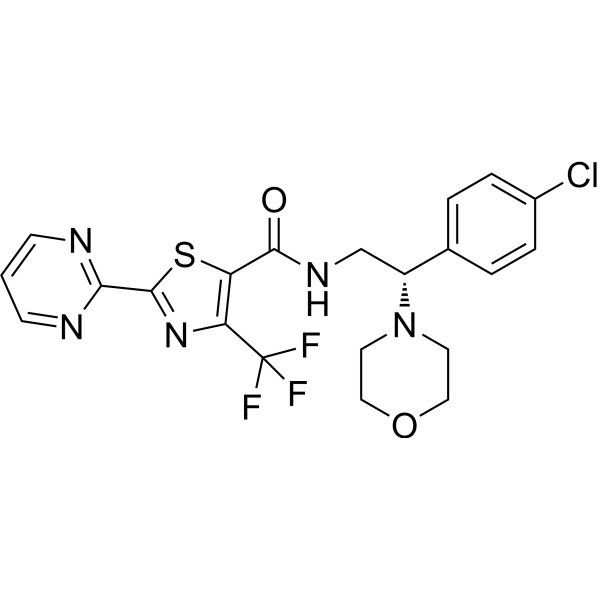 0 Images
Lu AF27139 is a potent, selective, and orally active antagonist of P2X7 receptor (IC50s of 12 and 2.4 nM for human and rat, Kis of 22, 54, and 13 nM for mouse, human, and rat, respectively). Lu AF27139 has rodent-active and CNS-penetrant character. Lu AF27139 has the potential for the research of CNS diseases.
-
P2X7 receptor antagonist-3
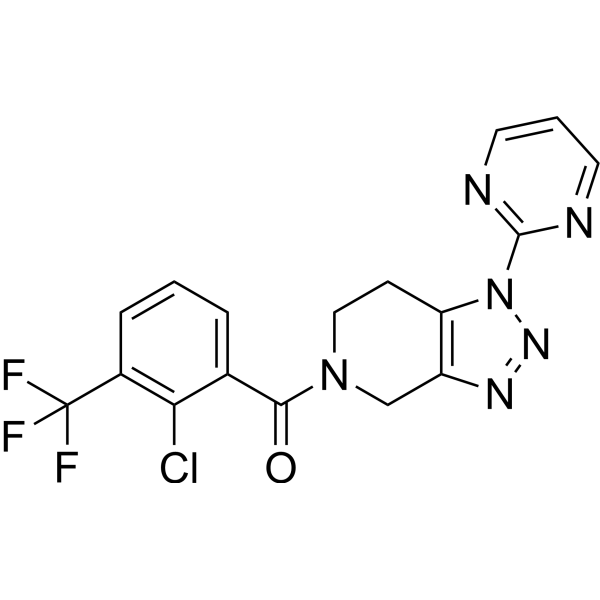 0 ImagesCat. No.: HY-148558CAS No.: 1627900-92-8
P2X7 receptor antagonist-3 is a potent P2X7 receptor antagonist with P2X7R IC50 values of 4.2 nM in humans and 6.8 nM in rats.
-
UB-MBX-46
 0 ImagesCat. No.: HY-179373
UB-MBX-46 is a potent and selective P2X7 receptor antagonist with IC50s of 0.514 nM (hP2X7R), 40.6 nM (rP2X7R), and 4.52 nM (mP2X7R), respectively. UB-MBX-46 interacts with the classical allosteric pocket of the human P2X7 receptor. UB-MBX-46 can be used for cancer, atherosclerosis, and neurode generation research.
-
P2X7 receptor antagonist-6
 0 ImagesCat. No.: HY-175196CAS No.: 1114621-31-6
P2X7 receptor antagonist-6 (Compound 2g) is a negative allosteric P2X7 receptor antagonist with an IC50 of 1.31 μM for hP2X7. P2X7 receptor antagonist-6 can be used for cancer, neurodegenerative, inflammatory, and infectious diseases research.
- 1



